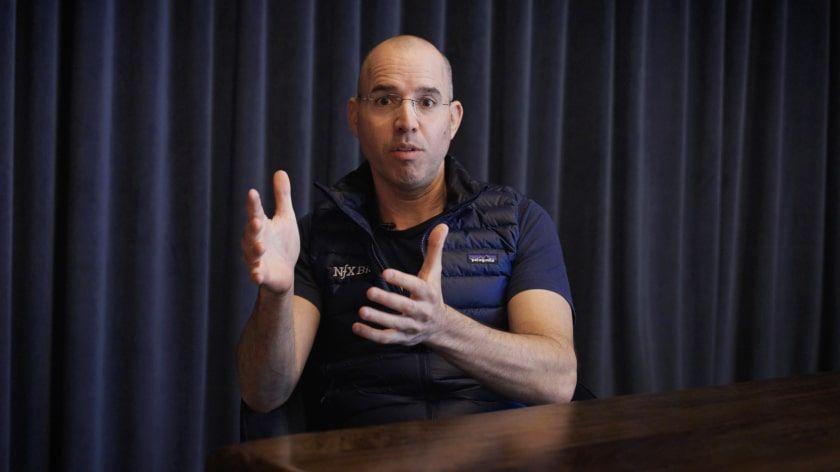
When people first encounter network effects, they think there's a network effect or not. That's like saying there's life, and there's not life. There's actually different types of life and there's different types of network effects. Not all network effects are created equal. And we started studying and noticing this back in the 2000's, and when we got to 13 network effects, what we realized was we needed a map. So we've come up with a map to help us visualize the different network effects and where they all fit in in terms of their relative strength, what types they are, and delineating how they're different from each other. That was a few years back, now we're up to 16 network effects and we'll walk through all of them.
Physical (Direct)
The first time we saw a commercial application of network effects was way back, 1907. The chairman of the board of AT&T who was deploying physical phones and copper wires to connect them all together so they could talk to each other, said in his annual report, "You might want to buy our stock because when we go into a town and we get a few nodes and a few of these copper wire links, nobody can compete with us, and we end up taking all the business in the town. So in every town we get into, we own everything. We're probably going to have a pretty good business here." He noticed it, explained it, and gave business reasons why it was important and boy, was he right. This physical direct network effect, physical being the copper wires and heavy black telephones that sit in people's homes, this was the first commercial network effect discovered and it turns out to be the strongest network that we know of.
There's a whole type in the center of the network effects map, color-coded blue. They're known as the direct network effects, because every node can touch every other node in the network. The physical is the most powerful, because once you've actually embedded atoms in the ground, like if you're Comcast or AT&T and you're putting cables in the ground and connecting to people's homes, it's very hard to rip them out. It's possible Comcast has the worst NPS score of any major corporation in America, and they can afford to do that because we can't replace them because they have this incredible, direct physical network effect.
Protocol (Direct)
The second direct network effect, we call protocol. You can see this with faxes or ethernet or Bitcoin, where you develop a protocol, publish it widely, and everyone can now attach to this protocol, and the more people use that protocol, the more benefit everyone gets from that protocol. Even crappy protocols like fax are still surviving in the 2020's, even though they were invented in the '70's, because so many people are using that protocol network effect.
Sign up to watch the episode and view the full transcript.
Chapters include:
Mapping Out The 16 Network Effects · Physical (Direct) · Protocol (Direct) · Personal Utility (Direct) · Personal (Direct) · Market Network · 2-Sided Marketplace · Platform · Asymptotic Marketplace · Expertise · Data · Tech Performance · Language (Social) · Belief (Social) · Tribal (Social) · Bandwagon (Social) · Hub & Spoke · Reinforcement (Bonus Section)
Sign up to watch
The Network Effects Masterclass
Learn how to use network effects to build iconic companies from day one
NFX Masterclass is the first video streaming platform built exclusively for early-stage founders. 100% free. It is built by NFX, the world’s largest dedicated pre-seed and seed venture firm and the creator of popular free founder products including BriefLink, a fundraising deck service, and Signal, the founder-investor network.
Is NFX Masterclass really free?
Yes. NFX Masterclass is 100% free and we will never charge for it. Our mission is to build tools that benefit the startup community. As founders ourselves, we have engineered network effects into 10 businesses valued at $10B+. We believe the more founders and startup teams that master the power of network effects, the more value will be created in the world.
Who is NFX Masterclass for?
Founders, CEOs, startup teams, growth leaders, marketers – and anyone who wants to move fast and find a competitive edge in their professional and personal lives.
Why do I need a login to access NFX Masterclass?
When you register for NFX Masterclass, you automatically get access to all the episodes, supplementary material, and transcripts and will be first to know when new seasons drop. You can also save your progress, to keep watching wherever you left off.
Are there upcoming seasons of NFX Masterclass?
Yes, upcoming seasons will drop soon. They are all focused on helping early-stage founders unlock their competitive edge. Viewers of Season 1: The Network Effects Masterclass will get first access to these seasons. Tweet @NFX to share wishlist topics you would like to see us cover in the future.
Is there an audio-only version of NFX Masterclass?
Yes, you can listen to NFX Masterclass once you are logged in. The full experience includes videos, diagrams, and reading material.